Total population
1,950,954 2023 Digital Census
Narowal District is a predominantly agrarian territory on the eastern edge of Gujranwala Division, with roughly 1.95 million residents (2023 Digital Census) across 4,623 km². Known for rice and wheat production, it has limited large-scale industry but three universities and a growing need for rural connectivity and WASH investment. This page summarises district statistics, services, elected representation, and priority development challenges.
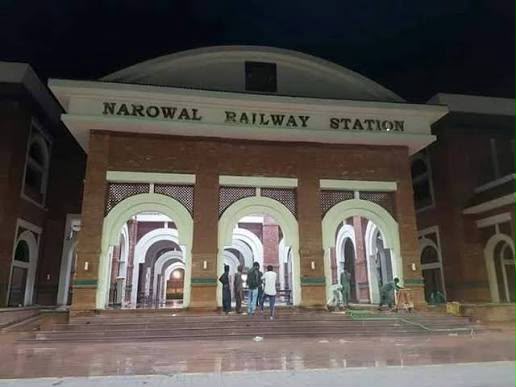
1,950,954 2023 Digital Census
4,623 km²
3 tehsils · 74 union councils · 1,316 villages
| Indicator | Value |
|---|---|
| Total population (2023 Digital Census) | 1,950,954 |
| Tehsils | 3 |
| Union councils | 74 |
| Villages | 1,316 |
| Total area | 4,623 km² |
| Schools | 1,609 |
| Colleges | 35 |
| Universities | 03 |
| Police stations | 14 |
| Civil courts | 17 |
| Type | Count |
|---|---|
| Schools | 1,609 |
| Colleges (08 boys + 04 girls + 03 commerce) | 35 |
| Universities | 03 |
| Out of school (5–16, combined est.) | 10–15% |
| Facility type | Count |
|---|---|
| DHQ hospital | 01 |
| THQ hospitals | 02 |
| Rural health centres (RHC) | 07 |
| Basic health units (BHU) | 14 |
| Rural dispensaries | 09 |
| MCH centres | 07 |
| Facility type | Count |
|---|---|
| DHQ | 01 |
| THQ | 02 |
| RHC | 07 |
| BHU | 14 |
| Total (listed types) | 40 |
| Circle | Stations |
|---|---|
| Narowal tehsil | 06 |
| Shakargarh tehsil | 06 |
| Zafarwal tehsil | 02 |
| Total | 14 |
| Tehsil | Courts |
|---|---|
| Narowal tehsil | 12 |
| Shakargarh tehsil | 02 |
| Zafarwal tehsil | 03 |
| Total civil courts | 17 |
Based on listed MNAs and MPAs (NA-75–76, PP-54–58). NA: PML-N 2; PP: PML-N 4, TLP 1.
Schooling, health access, employment, and judicial capacity from division district profile data.
| Member | Constituency | Name (Party) |
|---|---|---|

|
NA-75 Narowal-I | Anwar-ul-Haq Chaudhary (PML-N) |

|
NA-76 Narowal-II | Ahsan Iqbal Chaudhary (PML-N) |
| Member | Constituency | Name (Party) |
|---|---|---|
|
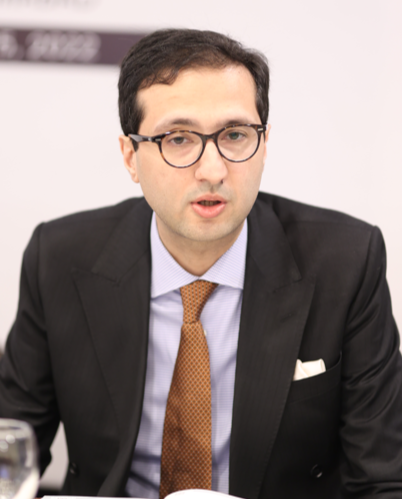
PP-54 Narowal-I | Ahmad Iqbal Chaudhary (PML-N) |
|
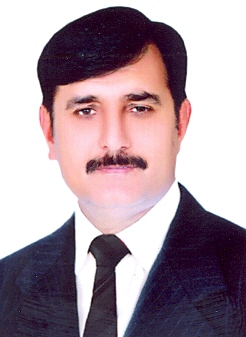
PP-55 Narowal-II | Mehmood Ahmad (TLP) |
|
PP-56 Narowal-III | Mannan Khan (PML-N) |
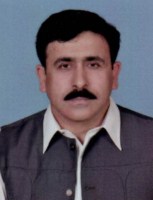
|
PP-57 Narowal-IV | Khawaja Mohammad Waseem (PML-N) |
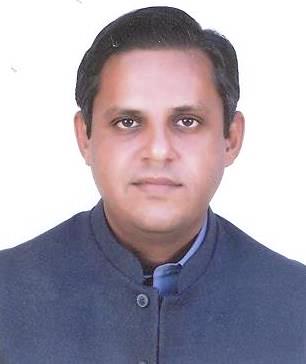
|
PP-58 Narowal-V | Bilal Akbar Khan (PML-N) |
As a predominantly agrarian, non-industrial district, its secondary rural market roads remain highly broken and unpaved, severely delaying the transport of seasonal crops to main central hubs.
The primary healthcare delivery system is bottlenecked by the slow operationalization of sub-divisional hospital upgrades, leaving dense rural tehsils deeply underserved by the main District Headquarters (DHQ) facility.
The district suffers from widespread groundwater pollution, where old, leaking supply pipelines allow dangerous bacteriological mixing and high localized concentrations of arsenic to reach domestic household taps.
Due to a near-total absence of large-scale commercial manufacturing industries, local educated youth face structural unemployment, driving an overwhelming dependency on unstable agricultural livelihoods or out-of-district migration.
The district's ecosystem faces severe degradation from the completely untreated dumping of municipal sewage straight into local storm-water channels and agricultural nullahs, which directly poisons the surrounding soil and water tables.
Link roads and rural connectivity gaps (e.g., to Shakargarh and Zafarwal) persist. Schemes including Muridke–Narowal Road and sewerage/drainage in Narowal towns are progressing under provincial ADP programmes.