Time for Provincial Status

Gujranwala Division, with a 2023 population of approximately 11.42 million larger than many sovereign countries such as Jordan (11.5 million in recent estimates), Sweden (10.5 million), or Hungary (9.6 million) and an area of 7,779 km² (comparable to several smaller nations or larger than countries like Lebanon or Qatar in scale relative to its dense population), deserves elevation to full provincial status to address its unique administrative, economic, and developmental challenges. Despite its economic significance as an industrial powerhouse contributing substantially to Punjab’s and Pakistan’s GDP through textiles, sports goods, surgical instruments, and agriculture, the division receives a disproportionately low share of Punjab’s annual budget likely under 10–15% in effective development allocations when benchmarked against its population weight (Punjab’s total population exceeds 127 million, making this division 9% of the province but often sidelined in favor of southern or central priorities.
Key Socio-Economic Indicators
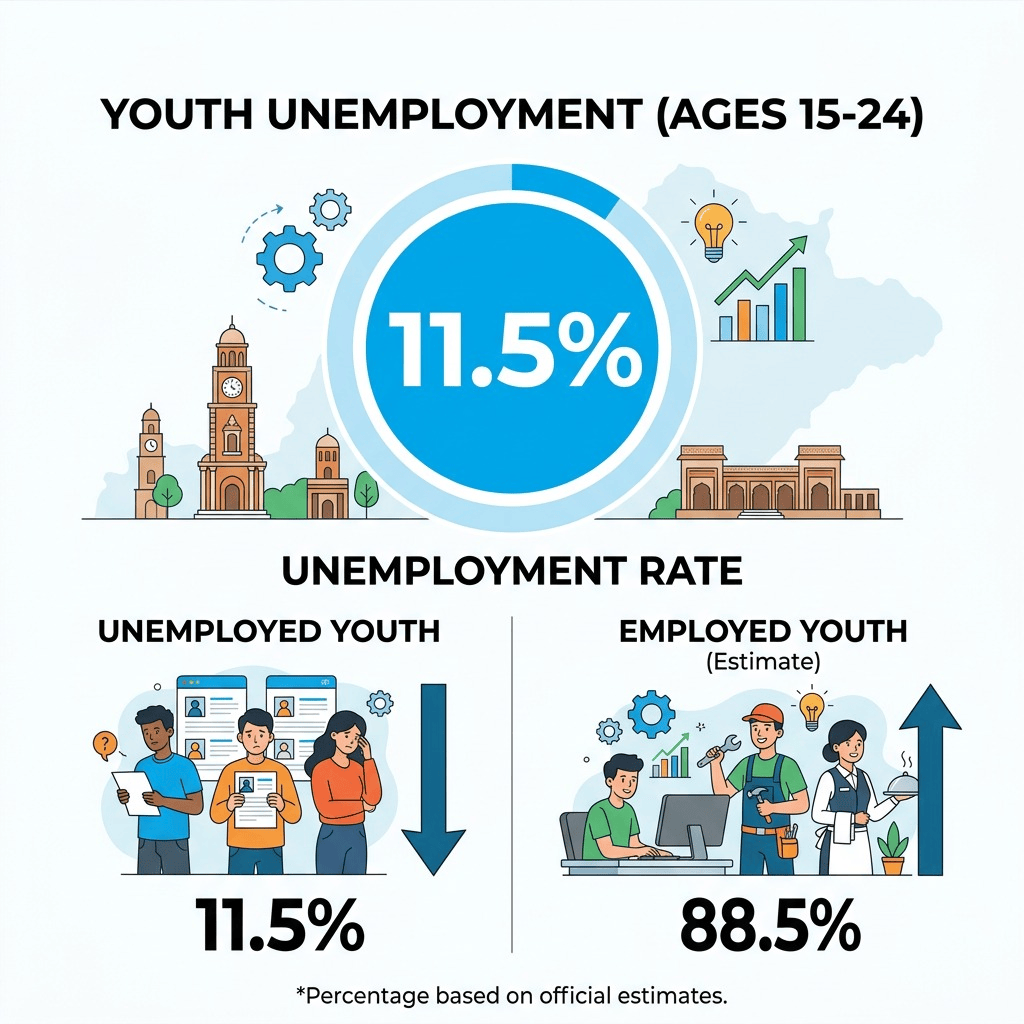
Youth Unemployment Youth unemployment (ages 15–24)
11.5%
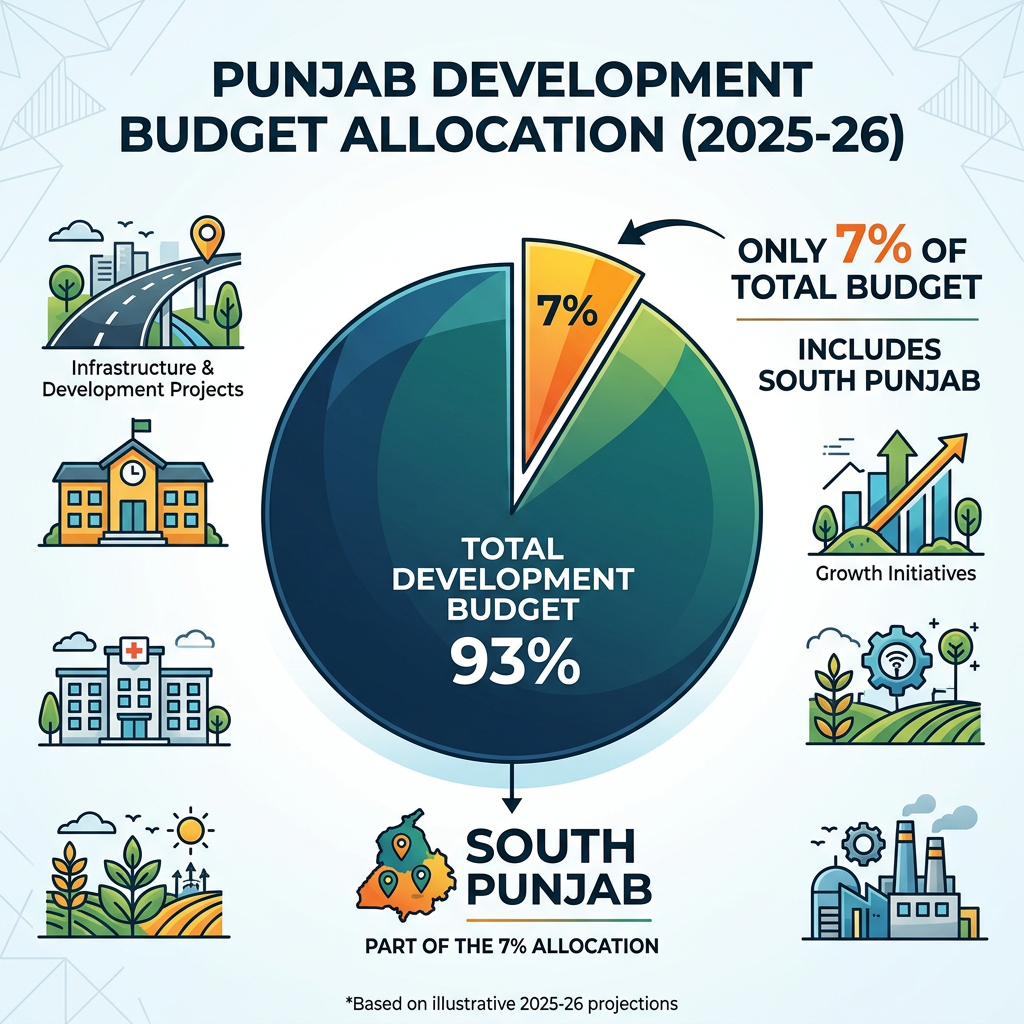
Development Budget Allocation of Punjab (2025–26) Gujranwala Division consumed 4.85% of the total allocated development budget for Punjab
4.85%
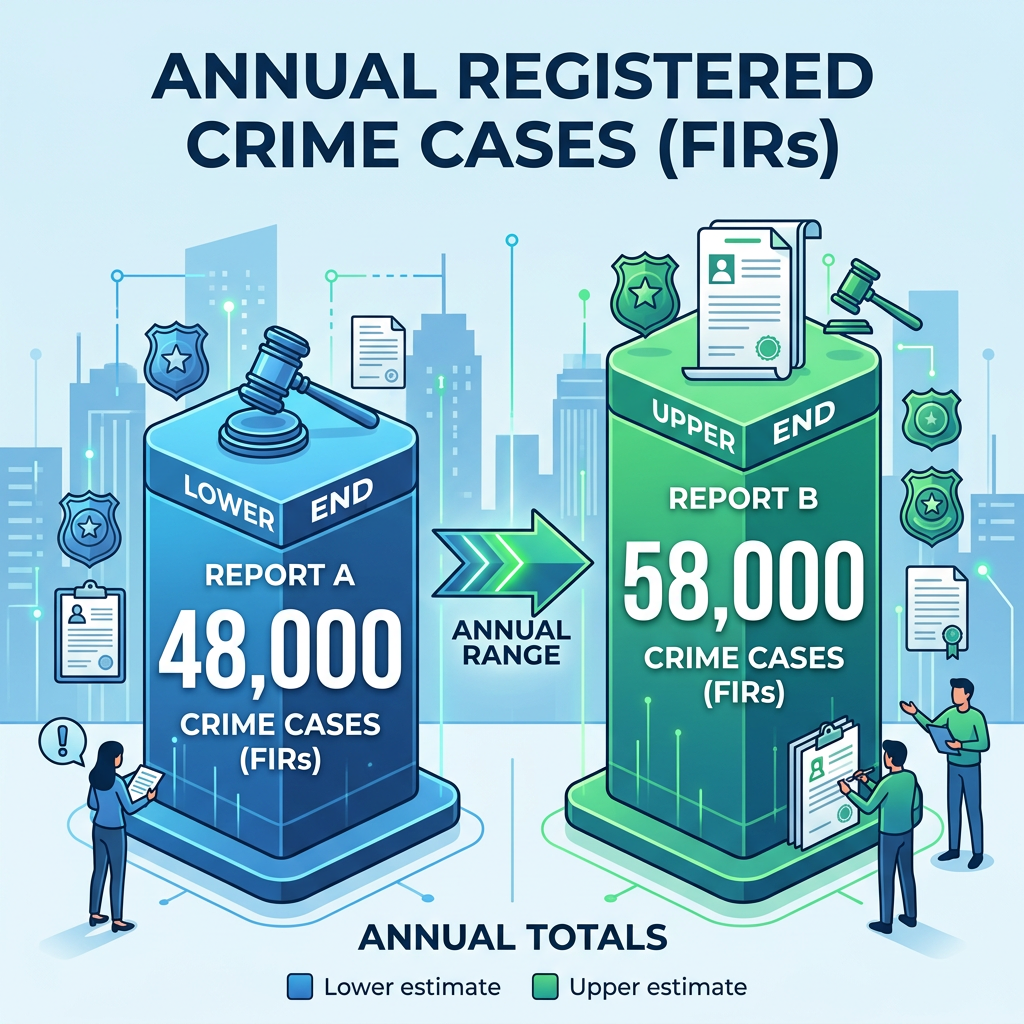
Annually Registered Crime Cases 48,000 and 58,000 crime cases (FIRs) annually
48,000–58,000
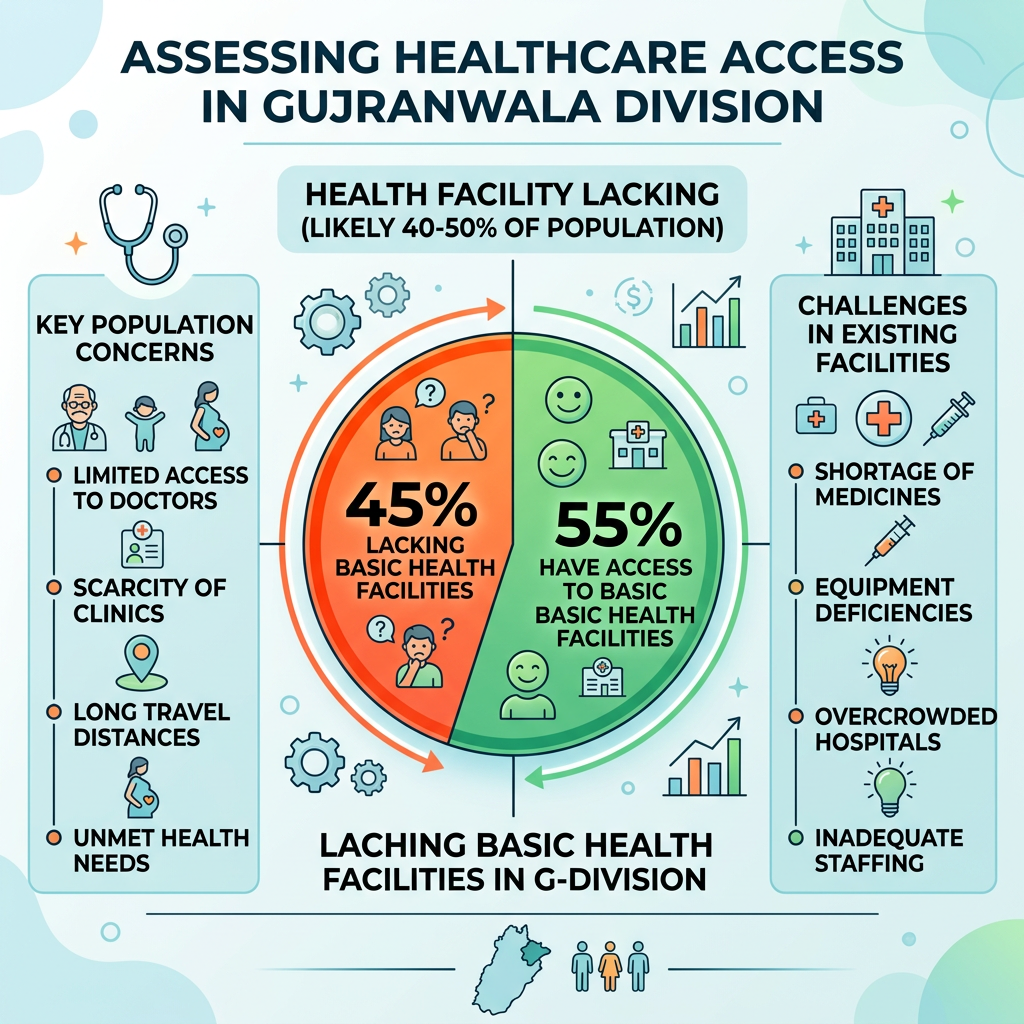
Lacking Basic Health Facilities Likely 40–50% population is lacking basic health facilities
40–50%
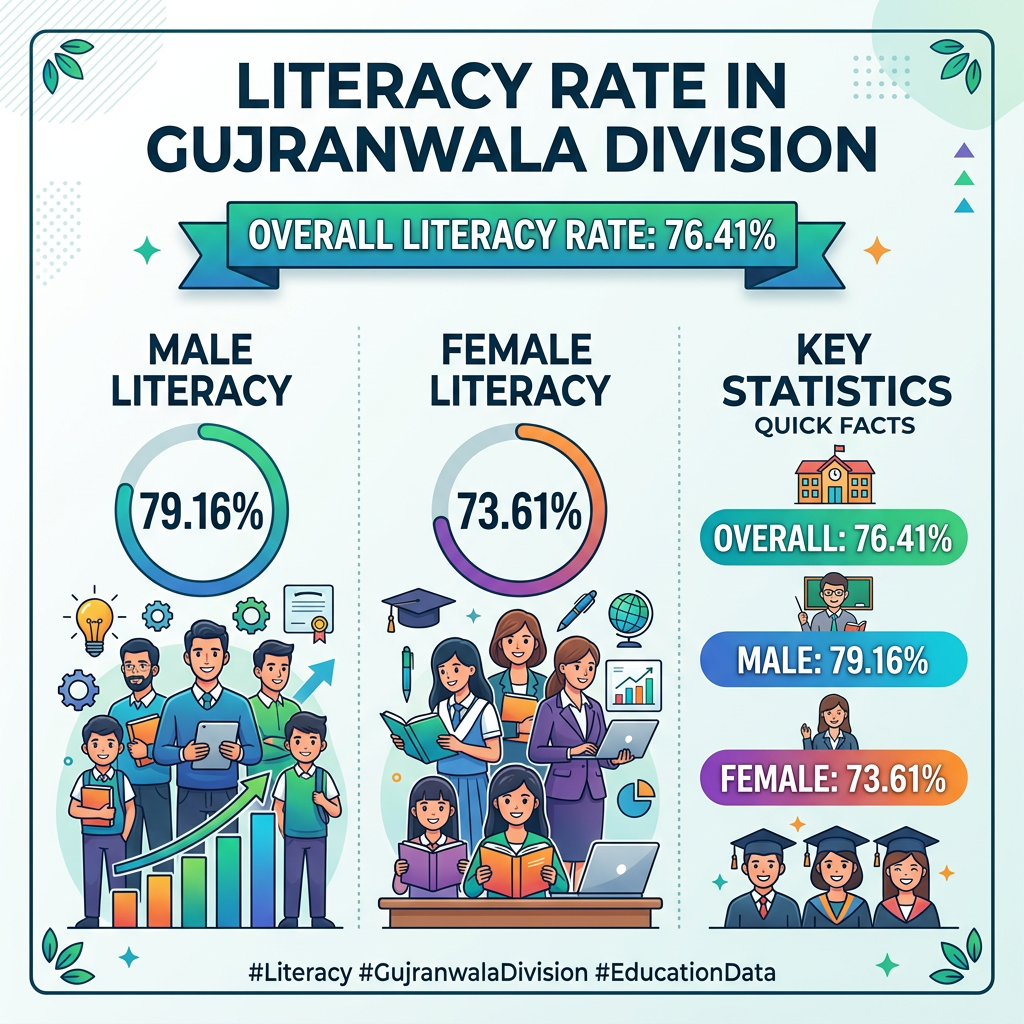
Literacy Rate Male: 79.16%, Female: 73.61%
76.41%
Youth unemployment (ages 15-24) in Gujranwala
Development budget allocation of Punjab (2025-26)
Annually registered crime cases
Lacking basic health facilities
Literacy rate in Gujranwala
03
Districts
12
Tehsils
0
Population (2023 Census)

Density 1,134 people/km². Urban: 44.2% (5.056 million); Rural: 55.8%.

0
Area (km2)

Approximately 3,888 sq mi.

Key Challenges

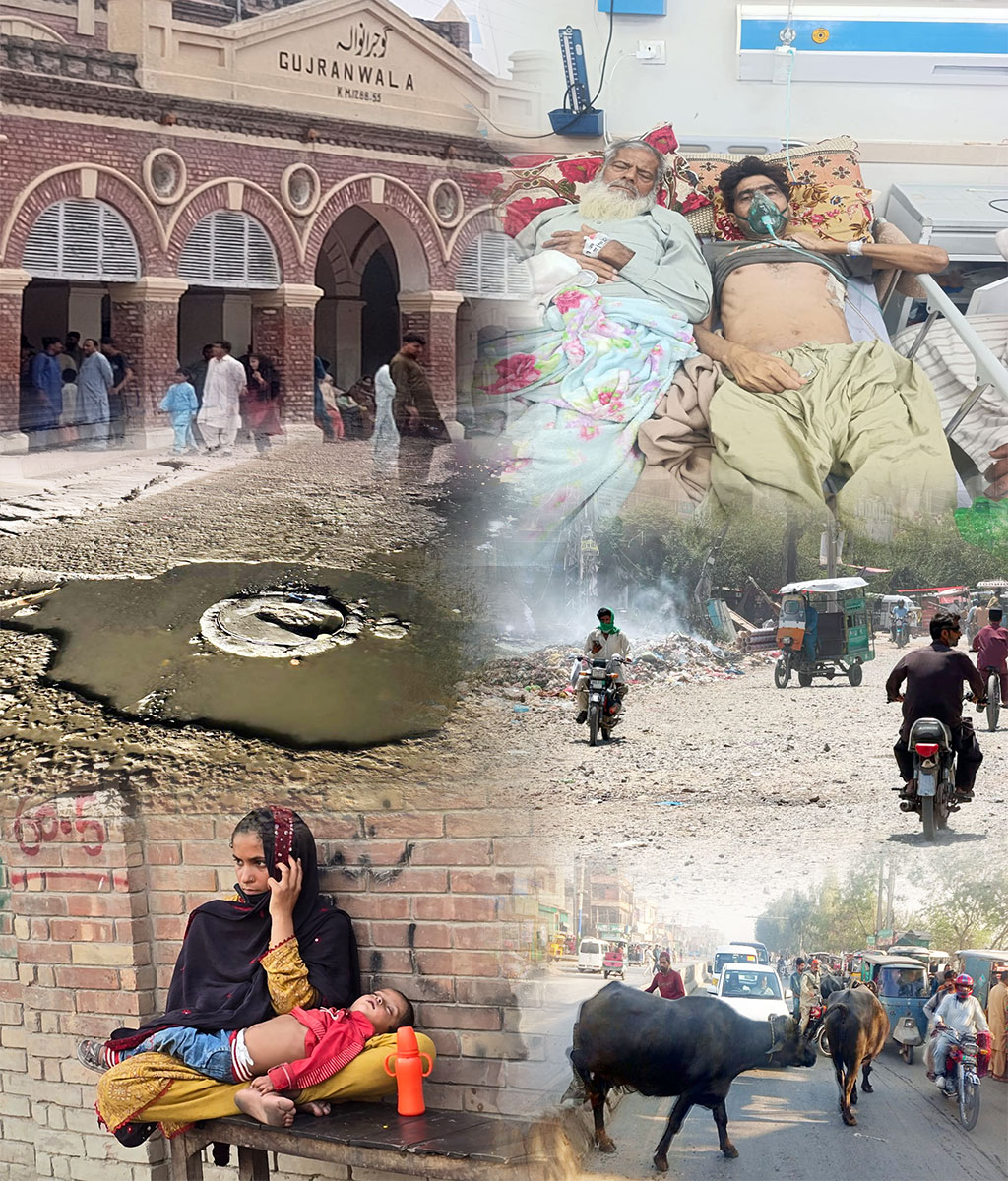
Gujranwala Division faces mounting pressure on healthcare, education, sanitation, drinking water, and employment—alongside budget execution gaps—as industrial growth and urban expansion continue to strain infrastructure and public services across its districts.
  • Health Overload:
    Gujranwala Division faces significant strain on healthcare infrastructure, with high patient loads at major facilities like DHQ hospitals. In Gujranwala Division, limited beds and staff relative to population contribute to overcrowding and pressure on emergency and tertiary services.
  • Education Shortfalls:
    Gujranwala faces gaps in access and retention. Punjab MICS data shows primary out-of-school rates around 14-15% province-wide, with higher drops at lower/upper secondary levels (22% and higher OOSC); Gujranwala has notable numbers of out-of-school children (tens of thousands estimated per district-level insights) and quality issues like low foundational learning skills.
  • Sewerage Pollution:
    Gujranwala struggles with untreated industrial and municipal wastewater discharge, contaminating water bodies and groundwater.
  • Drinking Water:
    Access to safely managed water remains low (Punjab 36%), with Gujranwala facing risks from untreated sewage infiltration and inadequate disinfection.
  • Employment Challenges:
    Punjab reports 3.5 million unemployed in the working-age group, with an unemployment rate around 7% (higher for youth at 10.9% and females).
  • Budget Allocation:
    Punjab’s development budget (Rs 1,240 billion for FY 2025-26) includes significant shares for education (Rs 811.8 billion total, with high development component) and health, plus allocations for water/sanitation and infrastructure in Gujranwala.
Health challenges

Governance Deficits

Sewerage Overload

Gujranwala division faces lower operational efficiency of sewerage disposal stations compared to Lahore.

Gujranwala
58/68 (85% Operational, in deteriorated condition)
Lahore Division
124/124 (100% Operational)

Poor Road Infrastructure

High traffic volumes on key routes, GT Road, linkages between Gujranwala-Sialkot-Narowal, cause congestion, accidents, and economic losses.

Drinking Water

Gujranwala Division faces a much worse drinking water crisis than Lahore Division.

Inactive Water Filtration plants

Gujranwala
56%
Lahore
28%

Poverty Rate

Compared to Lahore, Gujranwala is facing a much deeper poverty challenge.

Gujranwala
15.2%
Lahore
4–5%

Health Indicators

Stunted Growth & Wasting

Child malnutrition, including stunting and wasting, is significantly worse in Sargodha than in Lahore.

Stunting

Gujranwala
23.8%
Lahore
27%

Wasting

Gujranwala
7%
Lahore
7.7%

Beds per 1,000 people

The availability of hospital beds is considerably lower in Gujranwala than in Lahore.

Gujranwala
0.45
Lahore
1.2

Teaching & Specialized Hospitals

Lahore has a much stronger network of teaching and specialized hospitals than Gujranwala.

Gujranwala
3
Lahore
20

Child Health Crisis

The child health situation in Gujranwala is far more alarming than in Lahore.

Infant Mortality

Gujranwala
66
Lahore
44

Child Mortality

Gujranwala
76
Lahore
52

Health Professionals per 1,000

The Health workforce is severely weaker in Gujranwala than Lahore.

Gujranwala
0.4
Lahore
1.2

Education Shortfalls

Out of School Children

Gujranwala faces a far greater challenge of out-of-school children than Lahore

Gujranwala
14.96%
Lahore
9%

Net Enrolment Rate

Gujranwala faces a much deeper education gap in net enrolment than Lahore

Gujranwala
68–69%
Lahore
70%

Access to Schools

Limited school access remains a serious concern in Gujranwala

Gujranwala
30%
Lahore
90%

Judicial Stats

Lahore High Court

The Gujranwala Bench include thousands of matters, with the LHC overall handling 148,453 new cases while struggling to clear the backlog efficiently.

Lower courts (Gujranwala Division)

In the lower courts of the Gujranwala Division, 53,073 criminal cases and 91,140 civil cases are currently pending.

Consequently, the total number of pending cases in the lower courts of the Gujranwala Division amounts to 143,213

Annual Registered Crime Cases

On Average 58000 annually reported cases are in Gujranwala Division.

Global Comparison:

  • Pakistan: 241.5 million people with 04 provinces
  • India: Had 9 states at independence; now has 37. New states are created every five years, doubling the pace of development.
  • China: 1.4 billion people with 31 provinces.
  • USA: 320 million people with 50 states.
  • Indonesia: 275 million people with 34 provinces.
  • Russia: 142 million people with 70 to 75 provinces.

More Videos

Chat with Us